
Founder’s Note
Less friction. Learning still takes work.
Edited from conversations and product notes
Learning a language takes effort. will not change that. I just want to be more precise about where that effort goes.
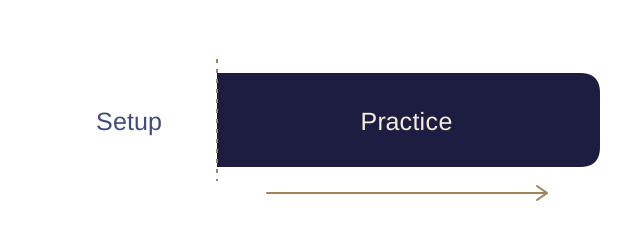
The work around the learning
When I switch apps, I sort words I already know. Before a grammar exercise, I have to look up new vocabulary. While reading, I search for the help I need. That takes time and attention before I even reach what I wanted to practise.
should reduce as much of that work as possible: carry over prior learning, reuse familiar words and make help easy to reach. The tool should support me in getting further with the language.
I still have to find the form myself
Understanding an explanation is not enough. I have to produce the form myself. A word that looks familiar when I read it may not come to mind when I write. That needs practice and repetition.
Practising familiar grammar with words I know is still demanding. I just do not have to work out what the words mean at the same time. If I make a mistake, it is easier to see what went wrong.
Help should let me keep going
When I read, I want to look something up and then find my way back into the sentence. An exercise can offer more support at first. Later I try with less help. Making my own attempt is part of it.
That does not mean everything has to feel difficult. A suitable text can be enjoyable. A short exercise can feel easy. But lots of correct clicks alone do not tell me whether I can use something without help.
No language learned in your sleep
will not teach you a language in your sleep. You will forget words, mix up forms and read sentences several times. Even with a good tool, that can remain demanding.
I want the effort to go towards what you want to learn. If you come back after a break, there should be a workable way to pick things up. You still have to do the learning. should help you with it.