
Founder’s Note
Why your vocabulary should come with you
Edited from founder interviews
When I tried a new vocabulary app, I knew roughly 2,500 Japanese words by my own estimate. First I had to sort them: known or unknown. Word by word.
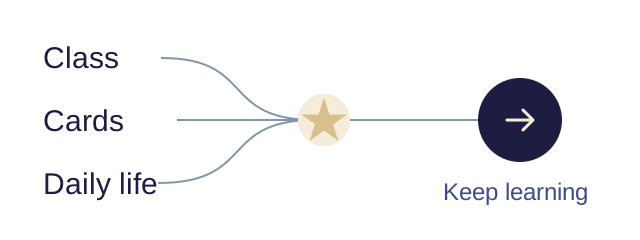
Three decks, and knowledge beyond them
I had studied with three Anki decks and WaniKani. Some words appeared in more than one deck; others came from class or everyday life. No single export held my whole vocabulary.
The new tool was not at fault, and sorting was fairly quick. But clicking through thousands of words still takes time. I wanted to continue learning, yet first had to recreate my starting point.
Bring your knowledge along; leave room for gaps
should use existing study data: which words you practised, how reviews went and when the next one is due. An old card must be matched reliably to a word. That will not work for every card.
Words learned in class often have no such history. There, an estimate helps, along with a way to say “I know this already.” Imports and estimates can work together, and you should be able to correct both.
Familiar words should come back
What matters to me is what happens next. A familiar word need not start again as a new flashcard. It can show up in a form exercise or a sentence. When reading, you may not need its pronunciation displayed.
If it turns out you do not know it well enough, you should be able to look it up and practise it again. Perhaps you know the meaning but not the reading. Your progress should respond to what you actually do.
That was one starting point for : less time explaining your vocabulary to an app, more time using it.